The Best Types of Insurance to Have Going Into a Recession
12 August 2026
When the economy starts to wobble, most people do the same thing. They cancel subscriptions, cut back on dining out, and start hoarding cash. But very few people think about their insurance portfolio until something goes wrong. That is a mistake. A recession does not just shrink your investment accounts. It also makes you more vulnerable to financial shocks, because your emergency fund may be thinner, your job may be less secure, and your assets may be worth less than they were a year ago.
Insurance is not a growth product. It is a loss prevention tool. And in a downturn, loss prevention matters more than almost anything else. The right policies can keep a bad situation from becoming catastrophic. The wrong ones can drain your budget with premiums that buy you nothing useful. So what should you actually carry into a recession? Let's break it down by priority, by trade-off, and by the mistakes that people make when they try to save money at exactly the wrong time.

Why Recessions Change the Insurance Calculus
Before we get into specific policies, you need to understand how a recession changes the way insurance works. In good times, you can afford to take on more risk. You have income coming in, your home is worth more, and you have time to recover from a loss. In a recession, all of that flips. Your income may drop. Your home value may fall. Your savings may be depleted. That means the same loss that was annoying in 2021 can be devastating in a downturn.The core principle is simple: insurance is about transferring risk you cannot afford to absorb. In a recession, your capacity to absorb risk shrinks. So you need to transfer more of it, not less. That does not mean buying every policy an agent tries to sell you. It means being strategic about which risks are most likely to hit you and which ones would do the most damage.
Another factor is that insurers themselves change behavior during recessions. They tighten underwriting standards. They raise rates on riskier lines. They pull out of certain markets. If you let a policy lapse now, you may not be able to get it back later at the same price, or at all. That is a hidden cost of dropping coverage that most people do not consider.

Health Insurance: The Non-Negotiable Foundation
If you have to pick one policy to keep through a recession, it is health insurance. This is not even close. Medical bills are the leading cause of personal bankruptcy in the United States, and that trend gets worse when the economy weakens. Why? Because people put off routine care, small problems become big problems, and if you lose your job, you may also lose your employer-sponsored coverage.The mistake people make is choosing the cheapest plan with the lowest premium and the highest deductible, thinking they are saving money. That works if you are young, healthy, and have a large emergency fund. But in a recession, you may not have that emergency fund. A $10,000 deductible is a real problem when your savings are already stretched. You need to think about your total exposure, not just the monthly premium.
If you lose your job, do not let COBRA lapse without thinking carefully. COBRA is expensive because you pay the full premium plus the employer's share, but it keeps your same doctors and your same network. In many cases, a marketplace plan with subsidies will be cheaper. But you need to check whether your doctors are in network and whether your prescriptions are covered. The worst time to discover a coverage gap is when you are already sick.
One more thing: if you have a health savings account, max it out before a recession hits. HSA contributions are tax deductible, the money grows tax free, and you can use it for medical expenses at any time. It is one of the few financial tools that works better in a downturn because you can let the money sit and use it when you actually need care.

Disability Insurance: The Most Overlooked Policy
Here is a question that most people never ask: if you could not work for six months, how would you pay your bills? Not from savings, because those are probably thin. Not from your spouse's income, because that may be at risk too. The answer for most people is that they would be in serious trouble. That is why disability insurance is arguably more important than life insurance for working-age people.The statistics are grim. A large portion of the workforce will experience a disability that keeps them out of work for at least three months at some point during their career. And recessions do not make you immune to car accidents, back injuries, or mental health conditions. In fact, the stress of a recession can make some health problems worse.
The key distinction is short-term versus long-term disability. Short-term policies typically cover three to six months. Long-term policies kick in after that and can pay until retirement age. If you can only afford one, go with long-term. The reason is that short-term gaps can be bridged with an emergency fund, but a long-term disability will wipe out everything you have.
Group disability insurance through your employer is better than nothing, but it has a major flaw: the benefits are taxable if your employer pays the premiums. If you pay the premiums yourself with after-tax dollars, the benefits come to you tax free. That is a huge difference. If you have the option to pay for your own coverage through a payroll deduction, take it. The tax savings alone can make up for the premium cost.
Auto Insurance: Do Not Drop Collision to Save a Few Bucks
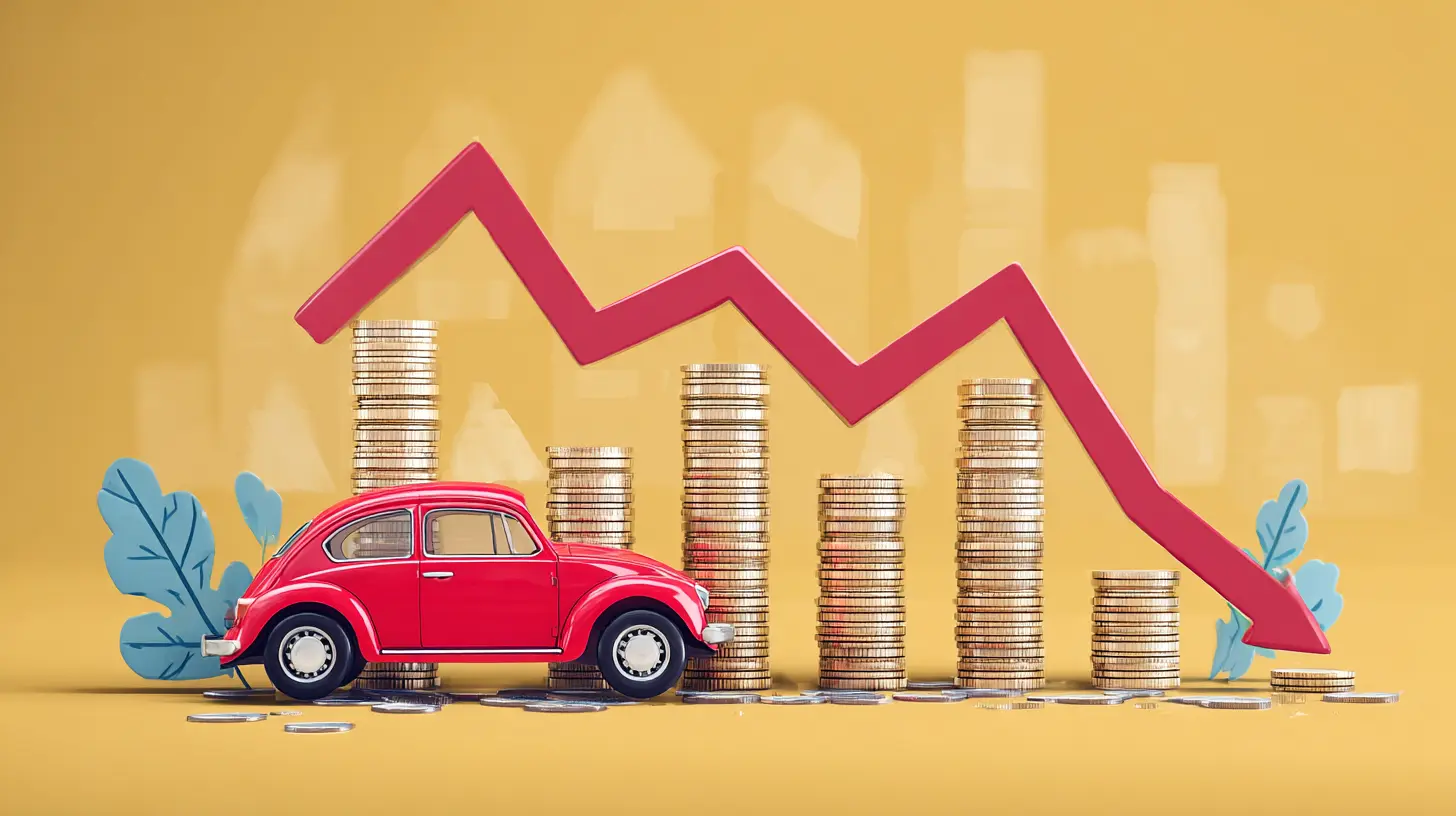
Auto insurance is one of the first places people cut when money gets tight. The logic seems sound: if my car is only worth $5,000, why am I paying $800 a year for collision coverage? That is a fair question. But the answer is not as simple as it looks.Yes, if your car is worth very little, collision coverage may not be worth it. The rule of thumb is that if your annual premium is more than 10 percent of your car's value, you should consider dropping it. But there is a catch. In a recession, replacing a car is much harder. Car prices may be volatile, financing may be harder to get, and your credit score may have taken a hit. If you total your car and have no coverage, you are not just out the value of the car. You are out of transportation, which means you may not be able to get to work.
The smarter move is to raise your deductible rather than drop coverage entirely. Going from a $500 deductible to a $1,000 deductible can cut your premium significantly, and it only hurts if you actually have a claim. Just make sure you have that $1,000 in cash set aside. If you do not, then a high deductible is a trap.
Also, do not forget uninsured and underinsured motorist coverage. In a recession, more people drive without insurance. If someone hits you and they have no coverage, your own policy is the only thing that will pay for your injuries and repairs. This coverage is cheap, and in a downturn it becomes more valuable, not less.
Homeowners and Renters Insurance: Protect Your Biggest Asset
If you own a home, your homeowners policy is protecting the largest single asset you have. In a recession, home values may drop, but the cost to rebuild your home does not drop with them. Labor and materials prices are driven by supply chains and construction demand, not by the housing market. So even if your home is worth less on paper, the cost to replace it could be higher than you think.The mistake that people make is reducing their dwelling coverage to save money. That is a dangerous move. If your home burns down and your policy only covers 80 percent of the rebuild cost, you are on the hook for the difference. And in a recession, you will not have the cash to make up that gap. Instead of cutting coverage, look at raising your deductible. A $2,500 or $5,000 deductible can lower your premium by a meaningful amount, and the risk is manageable if you have that cash in your emergency fund.
Renters insurance is even more important in a recession, because renters have less financial cushion. Your landlord's policy covers the building, not your stuff. If a fire or theft wipes out your belongings, you are starting from zero. Renters insurance is cheap, often less than $20 a month, and it also includes liability coverage. If someone slips in your apartment and sues you, the liability coverage can save you from financial ruin. Do not skip it.
One more thing to check: flood insurance. Standard homeowners policies do not cover flood damage. And flood risk is not just for coastal areas. If you live in a flood zone, even a moderate one, consider a separate flood policy. In a recession, FEMA assistance is not guaranteed, and if it comes, it is often a loan, not a grant. You do not want to be paying off a flood loan while you are also dealing with unemployment.
Life Insurance: The Timing Matters More Than the Amount
Life insurance is a tricky one in a recession. If you have dependents, you need it. If you do not, you probably do not. But the timing of when you buy matters a lot. Term life insurance is cheapest when you are young and healthy. If you wait until a recession hits and you have a health scare or a job loss, you may not qualify for the best rates, or you may not qualify at all.The common mistake is buying whole life or universal life insurance because an agent tells you it is a good investment. It is not. The returns are low, the fees are high, and the cash value grows slowly. In a recession, you want to minimize your fixed costs, and whole life premiums are much higher than term premiums for the same death benefit. Term life is the right choice for 95 percent of people. You buy it for a set period, usually 20 or 30 years, and you get pure protection.
The one exception is if you have a permanent need for life insurance, such as a special needs dependent or a large estate that will face estate taxes. In those cases, whole life can make sense. But for most families, term life is the answer. And here is a tip: if you are worried about losing your job, buy your term policy while you are still employed. Some policies have a conversion option that lets you turn term into permanent coverage later without a medical exam. That can be a lifesaver if your health changes.
Umbrella Insurance: The Cheap Shield You Should Not Skip
Umbrella insurance is the most underrated policy in personal finance. It is also one of the cheapest. For a few hundred dollars a year, you get an extra layer of liability coverage that kicks in when your auto or homeowners policy limits are exhausted. The typical umbrella policy starts at $1 million in coverage.Why does this matter in a recession? Because liability claims go up when the economy goes down. People get desperate, and they sue more often. If you are in a car accident and the other party has serious injuries, the medical bills can easily exceed your auto policy limits. Without an umbrella, you are personally on the hook for the difference. That can mean wage garnishment, liens on your home, and years of financial pain.
The trade-off is that umbrella policies usually require you to carry higher underlying limits on your auto and homeowners policies. That costs a bit more. But the total package is still worth it. If you have any assets at all, or even if you do not but you have a decent income, you need an umbrella policy. The protection is cheap relative to the risk.
One thing to note: umbrella insurance does not cover everything. It does not cover intentional acts, business losses, or certain types of professional liability. But for the common risks of daily life, it is the best value in insurance.
Long-Term Care Insurance: A Luxury, Not a Necessity, in a Downturn
Long-term care insurance is expensive, and the premiums tend to rise over time. In a recession, this is usually the first policy to drop, and that is often the right call. But there are situations where it still makes sense.If you have significant assets that you want to protect from nursing home costs, long-term care insurance can be a smart purchase. The average cost of a nursing home is very high, and Medicare does not cover long-term care. If you have a spouse who would be financially devastated by those costs, the insurance can be worth it.
However, the policies are complicated. They have benefit periods, elimination periods, inflation riders, and a host of other options. The premiums are not guaranteed, and insurers have raised rates dramatically in recent years. In a recession, you need to ask yourself whether you can afford the premiums for the next 20 years. If the answer is no, do not buy it. A policy that lapses because you cannot pay the premium is worse than no policy at all, because you have wasted years of payments.
A better approach for most people is to plan for long-term care through a combination of savings, family support, and Medicaid planning. That is not a perfect solution, but it is more realistic than paying high premiums during a downturn.
The Mistakes That People Make in a Recession
There are a few common mistakes that come up again and again when people try to cut insurance costs during a downturn. The first is canceling coverage altogether. That is almost always a mistake, because the risk does not go away just because you are not paying for protection. The second is switching to a cheaper policy without reading the fine print. You may be saving money, but you may also be losing coverage for things that matter.The third mistake is not shopping around. Insurance rates vary wildly between companies, and your current insurer may not be the cheapest. In a recession, it pays to get quotes from at least three different carriers. Just be careful about switching if you have a claim history or a lapse in coverage. Insurers look at that, and a new policy may cost more than your old one.
The fourth mistake is ignoring your deductibles. If you have a $1,000 deductible and you have $2,000 in savings, you are in a decent position. If you have a $5,000 deductible and $2,000 in savings, you are not. In a recession, you want your deductibles to be low enough that you can actually pay them if you need to. That may mean paying a slightly higher premium, but it is worth it for the peace of mind.
How to Prioritize When Money Is Tight
If you are in a situation where you cannot afford all of your insurance policies, you need to prioritize. Health insurance comes first, no exceptions. Disability insurance is second if you rely on your income. Auto insurance is third if you need your car to work. Homeowners or renters insurance is fourth, because it protects your shelter and your belongings. Life insurance is fifth, and only if you have dependents. Umbrella insurance is sixth, and long-term care is last.That is not a universal rule, but it is a good starting point. The key is to think about which risks would cause the most financial damage and which ones are most likely to happen. A young single person with no dependents does not need life insurance. A married couple with a mortgage and two kids needs life insurance more than they need an umbrella policy. The right answer depends on your situation.
The Bottom Line
A recession is a time to be defensive with your money. That means cutting waste, building savings, and being careful with debt. But it also means keeping the right insurance in place. The policies that protect your health, your income, and your assets are not optional. They are the difference between a temporary setback and a permanent financial disaster.The best strategy is to review your insurance portfolio before a recession hits, not during it. That way, you can make changes from a position of strength. If you already have good coverage, keep it. If you have gaps, fill them now. And if you are tempted to drop coverage to save money, think about what you would do if the worst happened. That thought will usually change your mind.
Insurance is not exciting. It does not make you money. But in a recession, it is one of the few things that can keep you from losing everything. Treat it that way.
all images in this post were generated using AI tools
Category:
Recession PrepAuthor:

Angelica Montgomery